
My love of outdated technology from the past, and of Pravetz computers in particular, inevitably led me to explore the BASIC programming language. Actually BASIC = Beginner’s All-purpose Symbolic Instruction Code. It was created in the 1960s, but was most popular in the 1980s, when programming and computers were the preserved territory of scientists at various universities and people from the higher levels of the army. There was no user interface, i.e. buttons and pictures, and controlling a computer involved typing multiple commands, which in most cases performed mathematical and similar tasks. In general, the computer was not a territory for the normal standard person who today wants to check their e-mail and Facebook. BASIC is precisely the language that is held responsible for bringing the average person and the computer closer together, due to its relative simplicity compared to other languages of the time. As the name of the language itself suggests, its purpose was to be easy for beginners and to lay the foundation of programming for the common man.
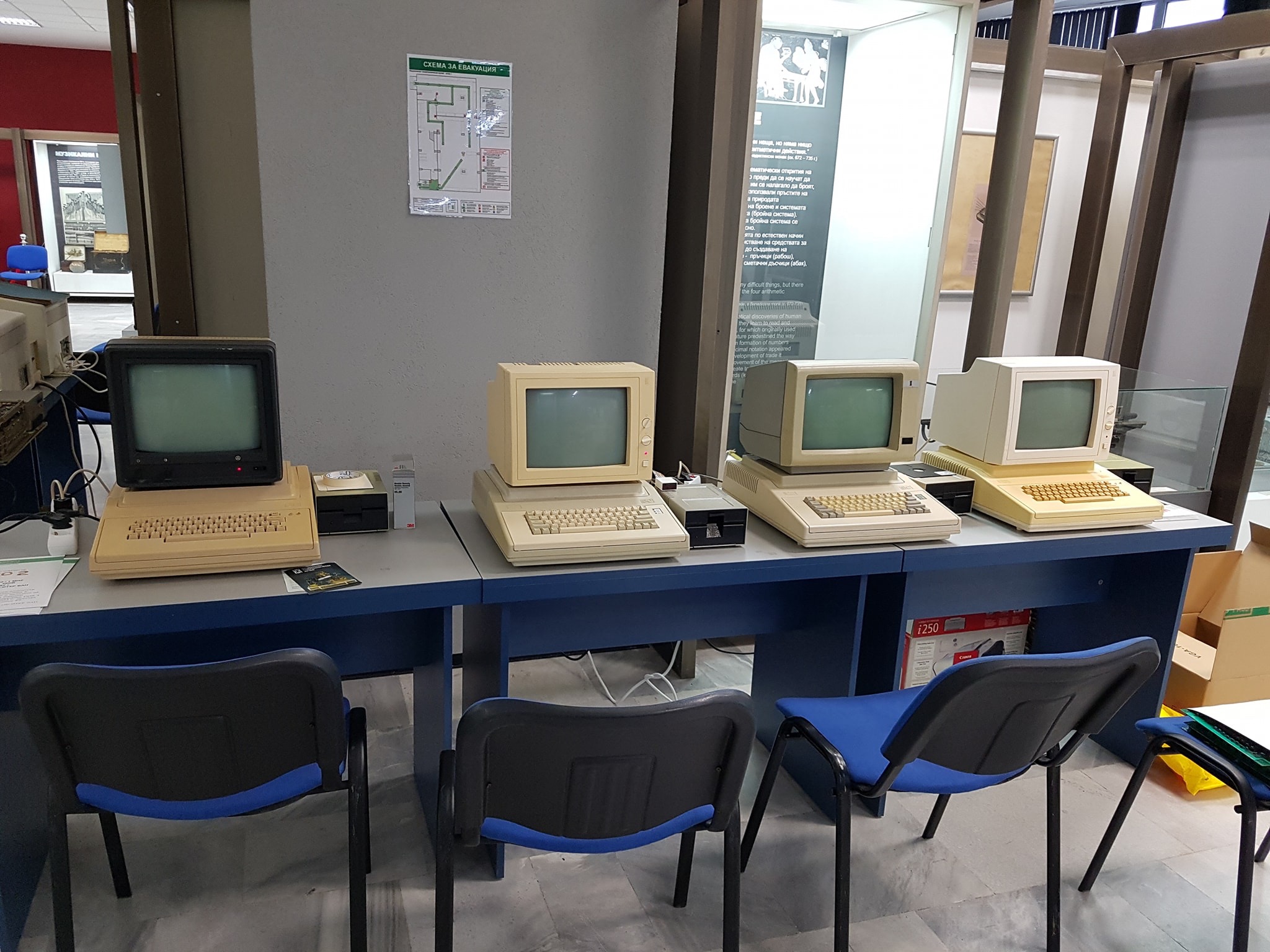
After a very interesting event at the National Polytechnic Museum in Sofia (read about the vintage computers event, click here to go to the blog post) I decided to research BASIC and see if I could start using it and travel back 40 years, to the times before I was born.
To begin with, I needed some kind of foundation, aid or textbook. Unfortunately, there is not much information left on the Internet about BASIC. I rummaged through the antiquarian bookshops and bought a couple of old books (which I guess are for kids haha) on BASIC programming, or as they called it back then – BASIC. I was fascinated by both books. That’s them:
"Ключ за компютър", 1985 година, от инж. Ненчо Сираков и Орлин Вълчев
"A key for the computer", 1985, by Nencho Sirakov and Orlin Valchev

"Аз програмирам на 9 години", 1987 година, от Петър Станчев
"I am programming at 9 years old", 1987, by Petar Stanchev
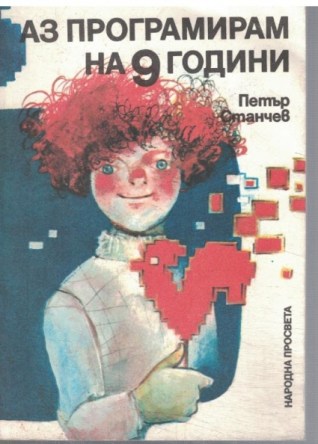
In both books, the information is provided as a step-by-step guide from the most basic general knowledge to actual programming. Everything is presented in a simple and pleasant way, with many exercises and tasks after the individual lessons. The books also have some nostalgic, extremely cute illustrations, to which even an adult can’t stay cool. I “ate the books with their covers” as we say in Bulgaria, which means – I read them very fast and with extreme pleasure.
I ran into a few problems too, of course. It’s about programming after all. If there are no problems and errors – You ain’t doing it right! At first I had a hard time finding online or installable environments for writing code, since BASIC in programming environments is now like Latin in linguistics. Dead work. After finding several versions it turned out that each works with its own rules and even its own syntax. Some commands worked only in the online platform, others only in the installable program, others did not work at all. The books that I have are written for a specific version of the Pravetz computers, and as you can guess, I didn’t have one at hand. I worked with what I had.
This is what I can say generally:
- BASIC is really a very basic and elementary (in every sense of the word) language. The more I dug into it, the more tricks, commands and methods from the languages of the 21st century I found. That is, if you delve into BASIC you will lay the foundations of all other popular and currently preferred languages that have inherited this and that from the old grandfather BASIC.
- Like any other programming language, BASIC has a lot to offer for our brain development in the direction of developing logical thinking, which makes it a wonderful hobby for a programmer with a little extra time.
- There is some oldschool romance, some forgotten and stale freshness in this programming language. I find it quite enjoyable to use and it has quickly become a favorite hobby.

This language grabbed me to such an extent that I wanted to show it to someone. And who is more suitable than my students? No one. I systematized some basic theory, came up with some exercises and created a mini guide to the ABCs of BASIC. After gaining more knowledge and some confidence, I organized a one-hour workshop at the school where I teach, after regular classes. I created a poster for the event that I put up around the school. In the breaks between lessons, I mentioned to the students and invited them to visit the workshop. It turned out to be a very interesting event that filled the computer room and my heart. Students, born after 2004 got to touch BASIC, which they had never even heard of, they wrote programs, listened to my special 80s playlist, saw real music records and floppy disks from that time, and had a lot of fun. I had even more fun than they did. You can find materials from the workshop, a short story from the event and other interesting and usable things, just click this link to go to the blog post.
 Technology Realm Resources
[…] 2. Причините аз да се захвана с БЕЙСИК, причините и вие да го направите, положителните черти и ползите на този така остарял език за програмиране, две учебни помагала, които ще използваме в уроците в блога ми и още информация можете да намерите в този мой пост: https://gerganakarabelyova.wordpress.com/2020/04/02/%d0%ba%d0%b0%d0%ba-%d0%b7%d0%b0%d0%bf%d0%be%d1%8… […]
LikeLike