This log is going to be a bit theoretical so I can explain everything I’ve read and also clarify things by trying to explain them.
An important thing to start with is the focal length. What is this anyway? (correct me if I’m wrong) This is the distance from the center of the lens to its focus (the place where light converges to a single point). This focal length is the main characteristic of the eyepieces and of the telescope.
A telescope lens has a focal length, so does an eyepiece. With these two quantities, we can calculate the degree of magnification that we will get when they are used together. This is done according to the following formula:
M = Fo/Fk , where:
Fo – focal length of the lens
Fk – focal length of the eyepiece
M – magnification
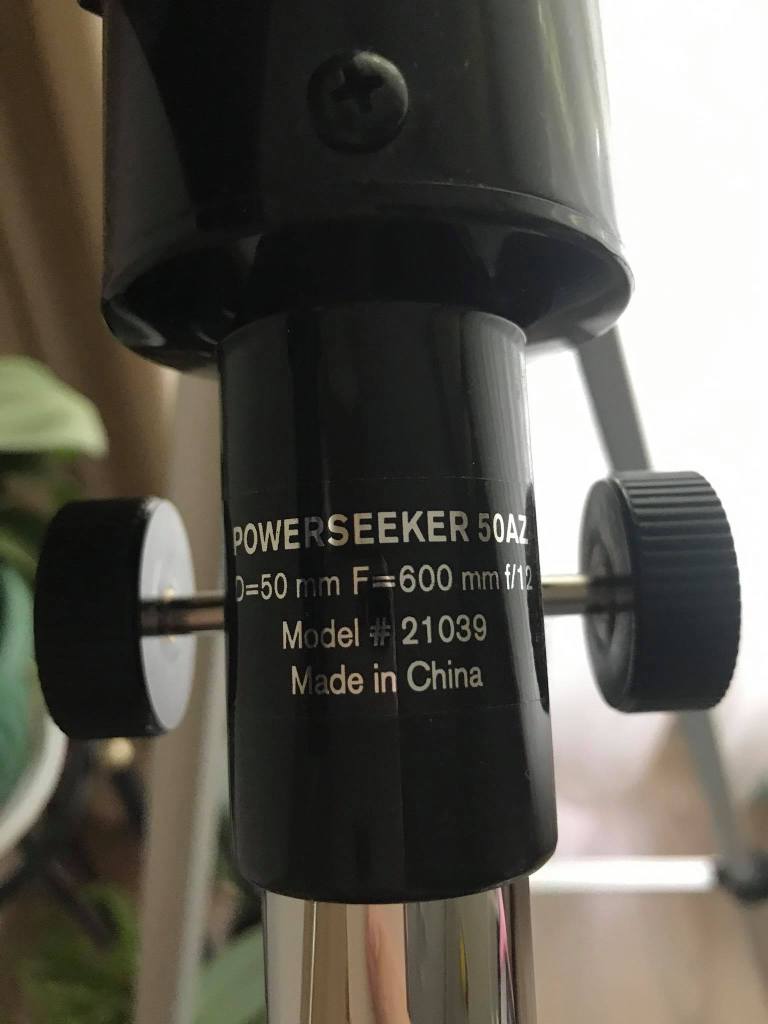
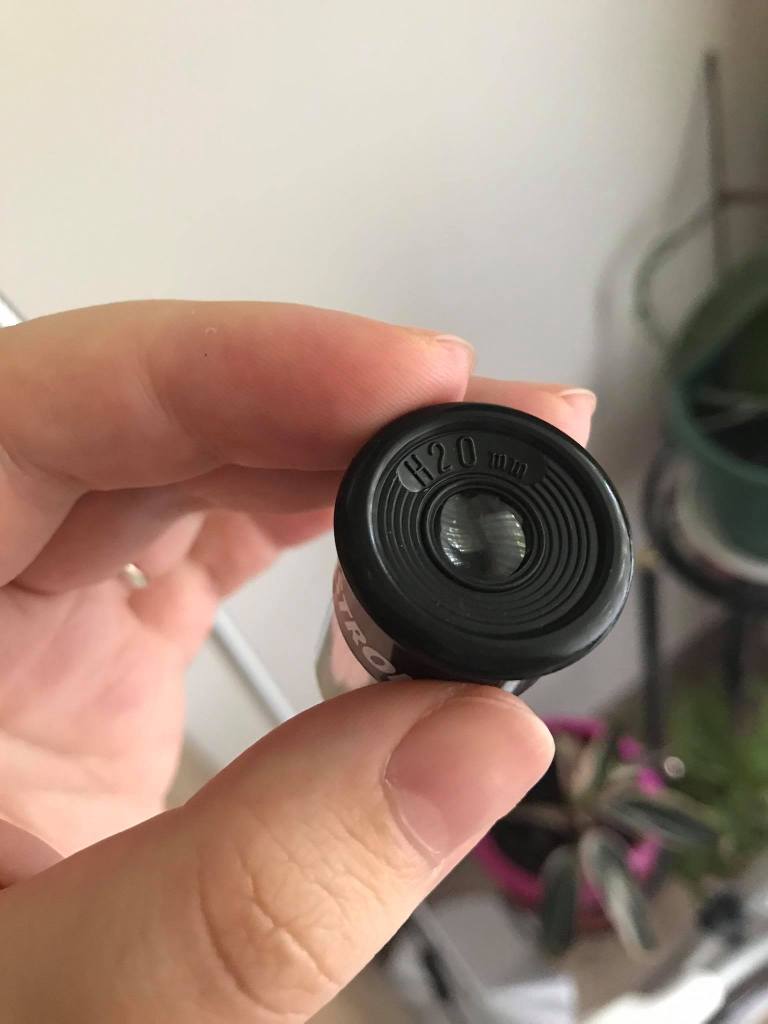
My telescope has a focal length of 600mm, and the eyepiece I used is 20mm. This means that the magnification I had that day to see the window with the blinds was 600mm/20mm=30. A thirty-fold increase. Separately, I used a magnifying lens, which is 1.5 times (erecting eyepiece), which makes 30 times 30×1.5=45 times. I used 45x magnification.
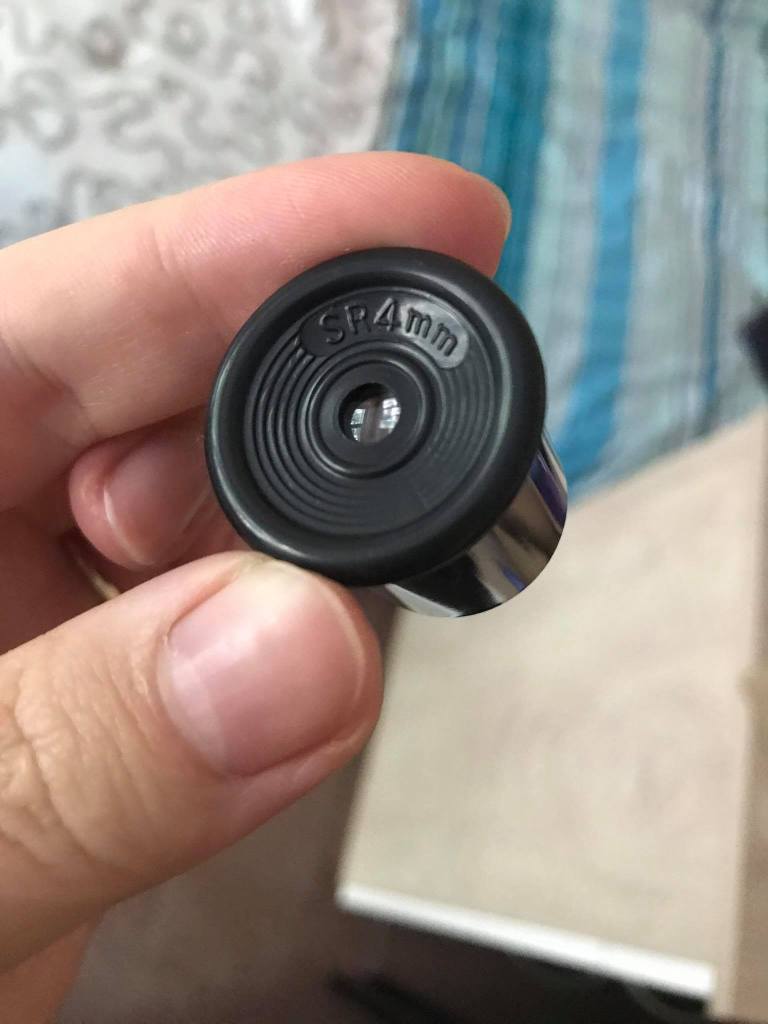
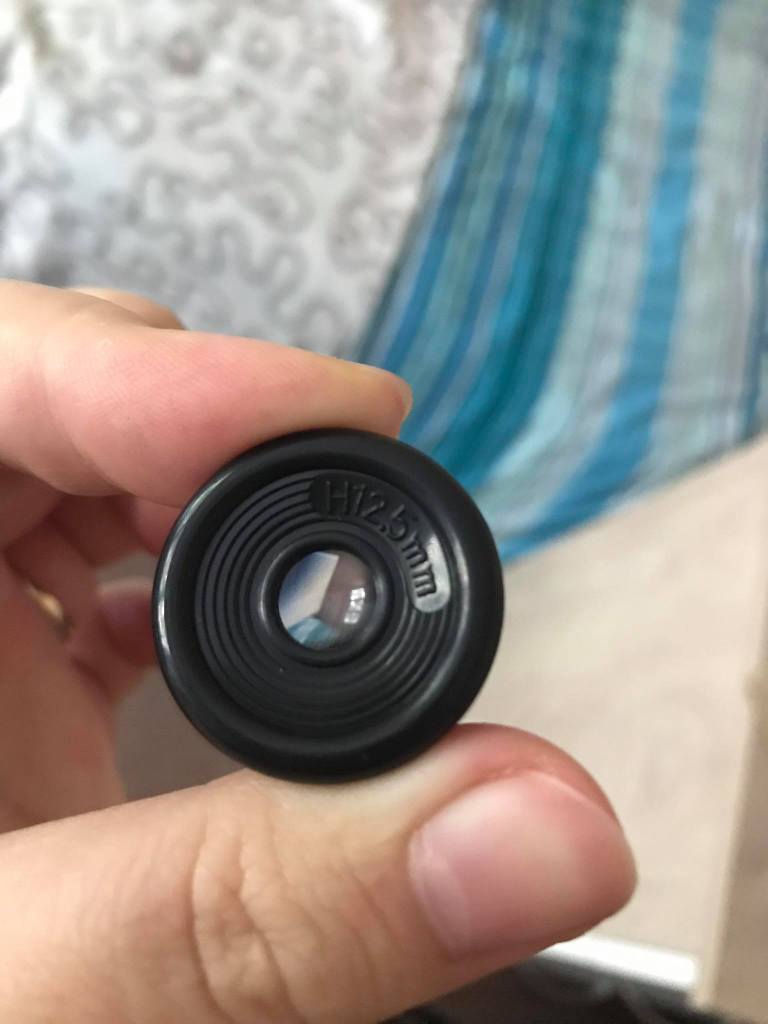
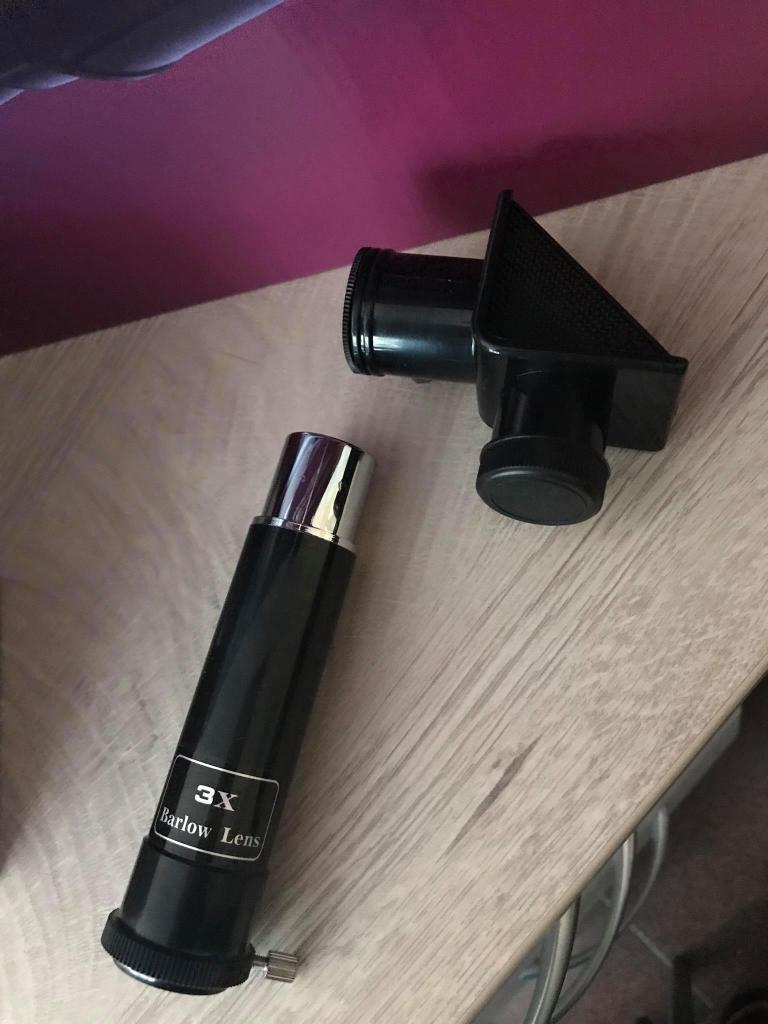
I looked through the box of eyepieces that came with the telescope and it turns out I have the H20mm, H12.5mm, SR4mm. The kit includes a 1.5x straight image lens and a Barlow 3x lens. The last extra it has is a prism which I have no idea how to use. I’ve also read a lot about what those letters H and SR mean in front of the millimeters on the eyepieces, but I can’t figure anything out. I guess my physics knowledge is lame, which prevents me from understanding the purpose of the different types of eyepieces.

 Technology Realm Resources