This is an article that I wrote for the “BG Nauka” magazine, published on 15 September 2020. Link to the article (it is in Bulgarian): Джон Кемени и началото на аматьорското програмиране
John George Kemeny was born on May 31, 1926 in Budapest, Hungary. He was a mathematician, computer specialist and educator, but is best known as one of the two inventors of the BASIC programming language.

John Kemeny was born in Hungary, but in 1940 his father took him and his whole family and emigrated to New York, USA. There he studied at George Washington High School and graduated from high school after three years with the highest GPA of his entire graduating class. In 1943, he was accepted and entered Princeton University, majoring in Mathematics and Philosophy, but missed a year to work on the Manhattan Project (the project to study and develop the world’s first atomic weapons). There he met and got to know John von Neumann. After the project was completed, he returned to Princeton, where he completed his undergraduate degree with a thesis on Equivalent Logical Systems. He remains at the university for graduate studies. In 1949, he defended his doctorate and briefly worked as a mathematical assistant to Albert Einstein himself.
In 1953, when Kemeny was 27 years old, he was appointed full-time professor in the mathematics department at Dartmouth University, where he taught and wrote a number of papers and books.
In 1960, he met Thomas Kurtz, and they became the pioneers of programming for amateurs. In 1964, they jointly invented the BASIC programming language, which laid the foundations of programming for people who were not necessarily scientists or engineers. With its simplicity and clarity of commands and logic, BASIC was becoming the new favorite hobby of people around the world. Also, BASIC became the most widely used programming language in which software was written in the dawn of computers – the Apple II, Commodore, TRS-80 and IBM computers in the 1980s. BASIC is actually an abbreviation for “Beginners’ All-purpose Symbolic Instruction Code”. This language is causing a revolution in computing environments. Before him, computers were reserved only for army specialists and scientists who used them mainly for mathematical problems. After BASIC, even the standard average user could operate a computer, and even to have fun with it and create their own games. BASIC is precisely the programming language and technology responsible for bringing people closer to computers.
BASIC’s code and commands use words from the English language, making programming an extremely easy task. For example, to tell the computer to “Write on the screen HELLO”, the command “print” is used, followed by quotation marks, in which the desired text is placed. Thus the command:
print “HELLO”
written in the console will cause the computer to print the word “HELLO” on the screen.
When Kemeny was asked what prompted him to invent BASIC, he said “Our idea was that every student on campus should have access to a computer and every faculty member should be able to use a computer in the classroom when appropriate. It was so easy to get to work on creating BASIC.”
From 1970 to 1981, Kemeny became president of Dartmouth University, but continued to teach and write various scientific works and papers. During his time as president, the university grew rapidly and became a pioneer in the use of computers by students, not just professors and scientists. During that period, Kemeny often shared how, in his opinion, computer literacy was no less important than our ability to read. These thoughts of his seem to predetermine the future of all humanity, as today we cannot imagine the world without computers, which are accessible and understandable to people of all ages and professions.
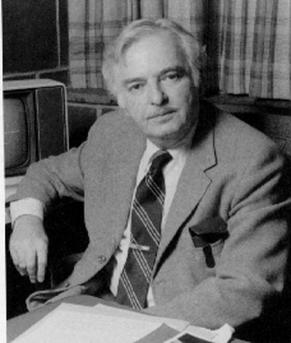
In 1983, Kemeny and Kurtz founded their company called “True BASIC”, whose purpose was to distribute their latest version of the programming language.
John Kemeny died at the age of 66, due to heart problems, in the United States, on December 26, 1992.
An interesting fact is that Kemeny was part of the so-called “The Martians” group. “The Martians” was a term given to a group of promising and later very successful Hungarian scientists, mainly mathematicians and physicists, who emigrated to the United States in the first half of the 20th century. Leo Szilard (physicist and inventor) is the man who figuratively invented this name, often joking that Hungary is the favorite place of Martian super-intelligent aliens. Some of the scientists who are “Martians” besides Kemeny are Paul Erdos, John von Neumann, Leo Szilard. The history of the name “The Martians” itself begins with the strong Hungarian accent on the English of scientists who emigrated to the United States. Because of this emphasis, they were always considered outsiders in American society. Moreover, these scientists appeared to be preternaturally intelligent, spoke a strange (to Americans) mother tongue, and all came from an unheard of, distant, and small country. These facts led to the introduction of the common name for them – “The Martians”.
“The Martian” John Kemeny is an important figure in the world of computers and computer science, because thanks to his visionary, revolutionary way of thinking and his years of work, today we all use computers on a daily basis, machines that have become so deeply rooted in our society that it is no longer possible to function without them.
References:
- „True Basic. A sketch of John Kemeny“, Dartmouth Alumni Magazine, 13 December 2001
- „Fifty Years of BASIC, the Programming Language That Made Computers Personal“, „Time“ magazine, 29 April 2014
- An iterview with John Kemeny, Web archive, https://web.archive.org/
- „The voice of the Martians“ – Gyorgy Marx
 Technology Realm Resources
[…] 1. Историята на езика БЕЙСИК и на изобретателя му Джон Кемени можете да намерите тук: https://gerganakarabelyova.wordpress.com/2020/09/15/%d0%b4%d0%b6%d0%be%d0%bd-%d0%ba%d0%b5%d0%bc%d0%b… […]
LikeLike