We left Sofia at exactly 6 p.m. We wanted to go to Vakarel (the sky there is of Bortle class 4) – close enough to Sofia, but with a much lower index of light pollution, and it is at 1000 m above sea level. In Sofia, even in the outer districts, the sky is Bortle class 6-7, which does not allow seeing anything other than the Moon and Venus. At the last moment, we decided to change the plans and climb Vitosha to the Aleko hut (the sky there is of Bortle class 4), because first of all – it is at a much higher altitude – 1840 m (possibly it will be above the low clouds) , and second – because we saw a webcam (link to the webcam if you need it too: http://free-webcambg.com/Aleko-01-webcam-live-online-camera-Vitosha-kameri-na-jivo-vremeto-weather.htm ) , on which there was not a single cloud, and the sun shone brightly in the empty sky, while down in Mordor (that is what I call Sofia, the capital of Bulgaria, the city where I live) it was gloomy and very cloudy. After all, both places are class 4 on Bortle’s dark scale, and it doesn’t really matter which one we choose, Aleko or Vakarel. The question was where there are less clouds, and the answer – high up, at the hut.
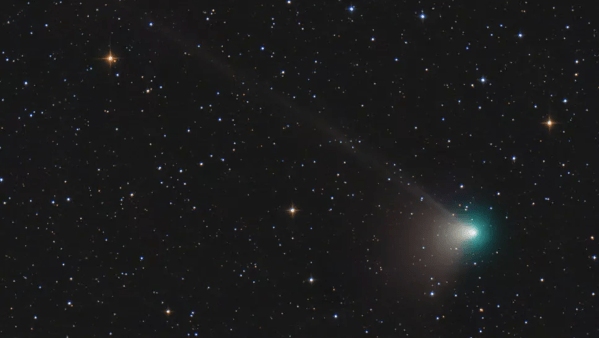
We wanted to see Comet C/2022 E3 (ZTF), which has become very popular in recent weeks. In fact, this space object is called the “green comet” because of its subtle green glow, which is thought to arise from the presence of carbon diatoms—pairs of carbon atoms that are bonded together—in the comet’s head. The molecule emits green light when it interacts with ultraviolet rays from solar radiation.
The comet’s orbital period is estimated to be about 50,000 years, meaning that it was last this close to Earth during the Upper Paleolithic, and the only eyes that may have seen it then were those of Neanderthals (as jokingly mentioned in many articles). All these claims are just theories and guesswork at this stage.
We traveled for a long time with the cars up, but the road to the Aleko hut is quite wide and flat, paved. It was not very icy and was well cleaned, despite the cold temperatures and unforgiving winter. We stopped just short of the lodge in a broad spot where there were fewer trees and a clear view to the north where the comet was expected to be. There was quite a bit of snow, but it was neatly piled on the side of the road.
The exact location we chose is a large and wide space, a kind of widening of the road, right before the hut (about 50 m from it). It was dark enough there and we were not disturbed by the lights of the lodge itself. We also turned off the car lights.
The company and I went down to the field and set up the two telescopes, and then I took out the thermos with hot ginger tea, which saved us in the terrible temperature of -7 degrees. A friend with a much better telescope than mine was also with us. He was carrying a Skywatcher Skymax 127, which unfortunately had no battery and could not make our job easier with self-calibration and self-searching for space objects. We used it however, but it could have been better. It turned out to be an interesting machine, despite the lack of a stand and the need for a flat horizontal surface on which to place it in order for it to work. We carried a folding table for it.
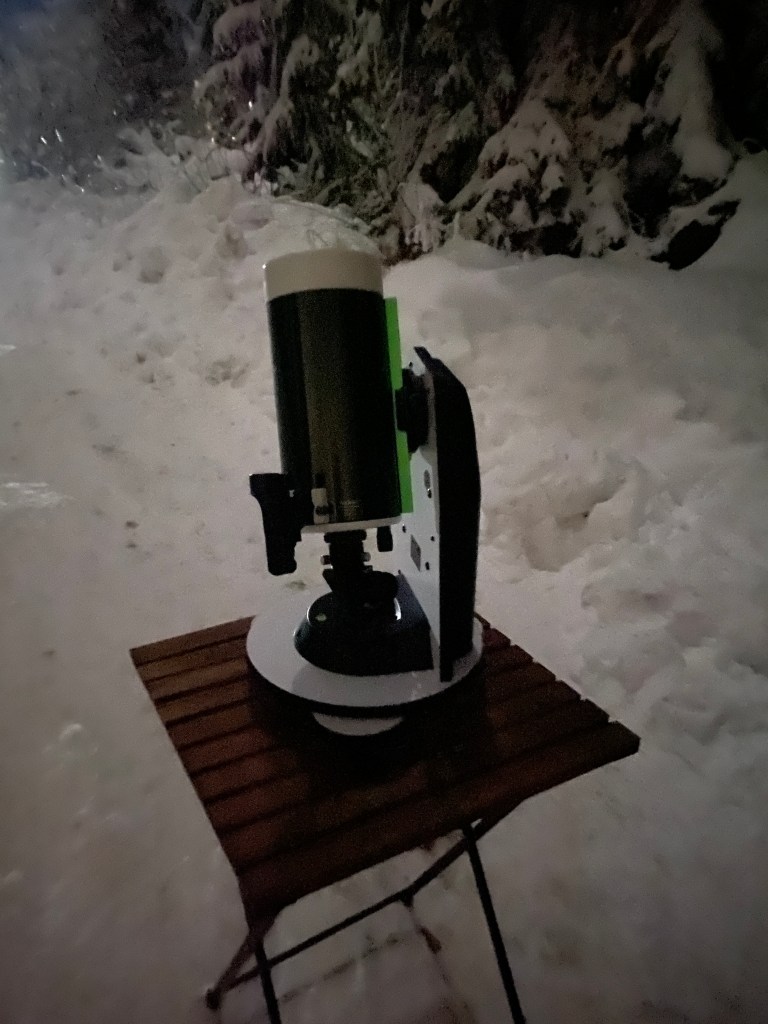
Images with this telescope are much more detailed and clear. Compared to him, my telescope is straight up binoculars, haha. And there was a viewfinder with a laser, and that helped a lot in the search for celestial bodies.
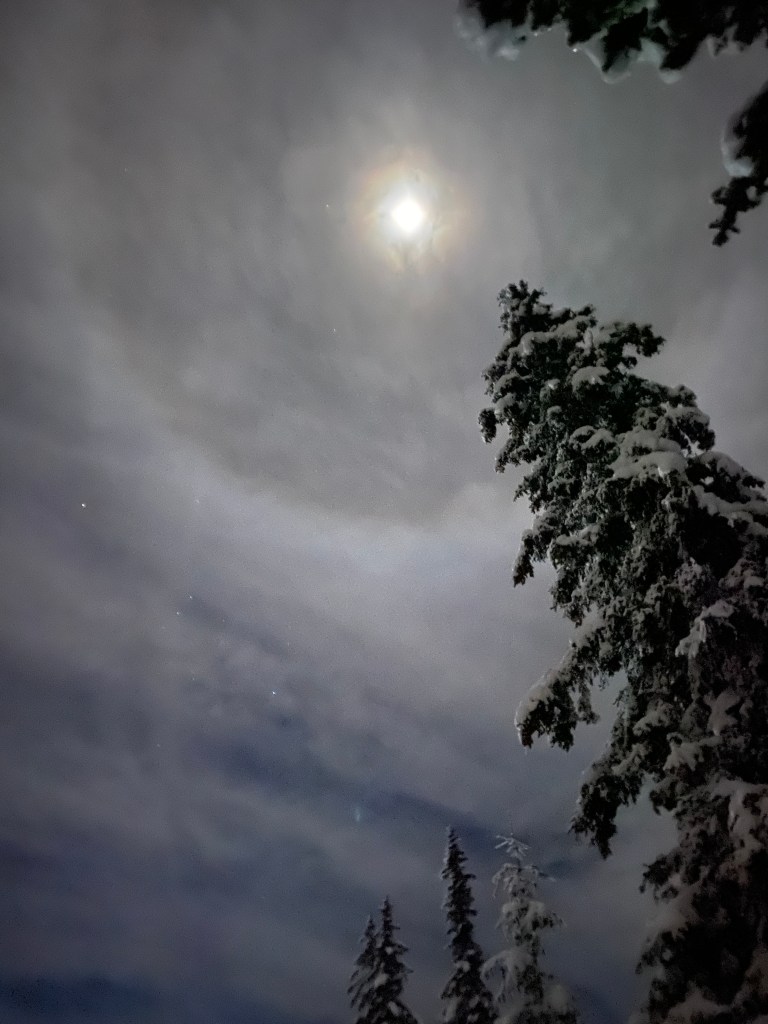
We saw the Moon extremely close. The craters were clearly visible, so was the unclear line where the celestial body sinks into darkness. Never before had I seen the moon so well, so clear, so real, as if I could reach out and touch it. Even for this view alone, it was worth the exercise and the cold. We also observed Mars.
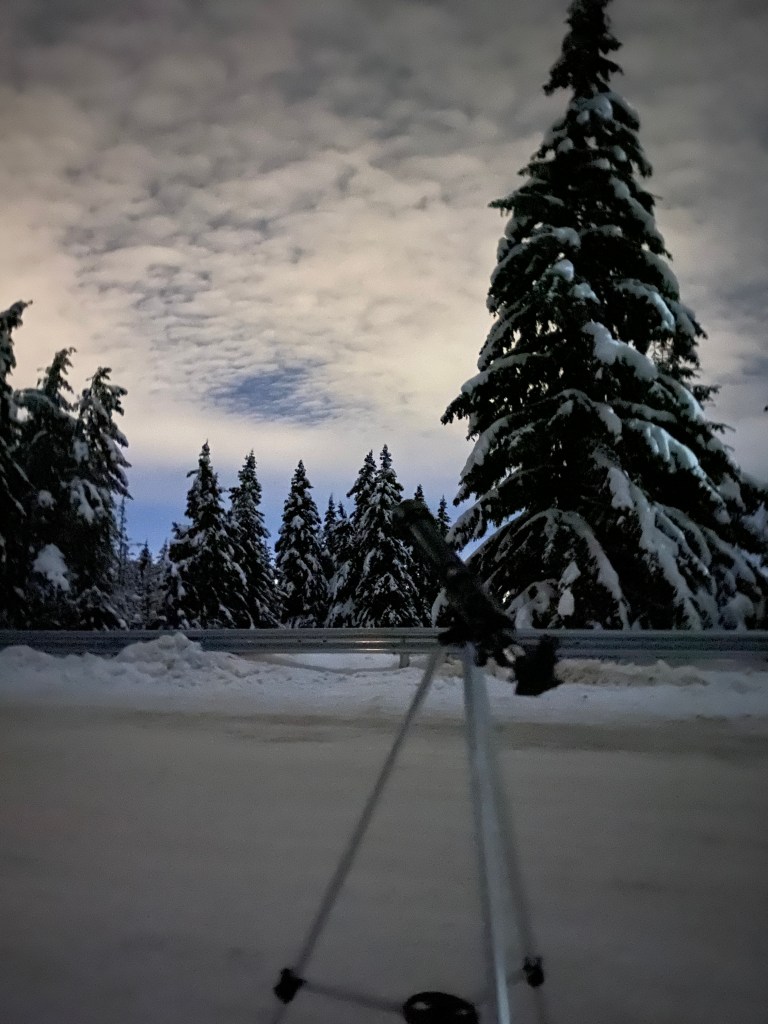
Just as we aimed the telescopes at the comet, clouds began to appear in the otherwise clear sky. We managed to catch a glimpse of it, but the misconception that we would see the tail and the bright green color clearly proved to be key. We saw the comet as a relatively bright object, but unfortunately – indistinguishable from any other planet or star we could observe with the two telescopes.
It was an exceedingly pleasant activity, though stiff with cold, and very short. It turns out that Aleko Hut is an affordable and nice place (small amount of gas required to run the car to the place), and the area around the hut is absolutely perfect for gazing at the sky with a telescope.
 Technology Realm Resources