Artificial intelligence can empower teachers to improve student engagement and focus by providing a lot of things. Yes, the automated administrative tasks and the freed up time to interact with and support our students directly are a great pro to AI, but let’s explore some other very powerful positive sides to it.
Personalized experience. The best option capability of AI, in my opinion. I could write a task description and guidelines after a lesson, and then feed that info to an AI algorithm which can adapt the task for beginner students, as well as the more advanced ones. It could help me come up with follow-up questions and more tasks, or it could quickly generate easy or harder tests, using the info I fed it. This tailored approach can help maintain student interest and promote active participation in the classroom. If you haven’t tried this yet, let me give you an example with the most popular free chat bot AI tool – ChatGPT.
I gave it a simple task, that you can see below, to generate a test.
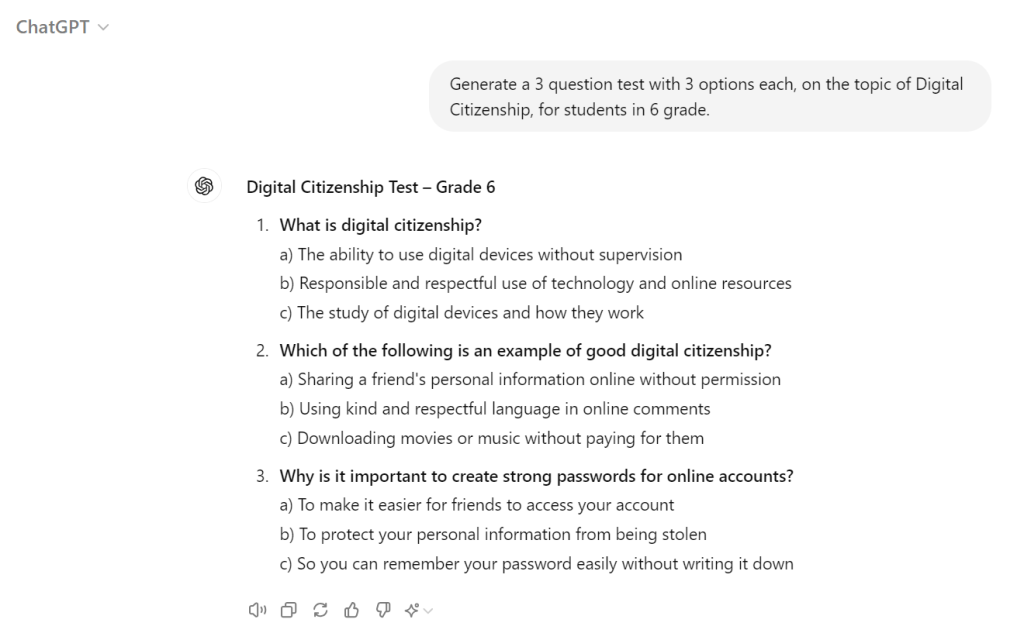
Afterwards I gave it a new task – to diversify the test, complicate it a little bit so it’s harder and suitable for the more advanced students. This is how my query and response looked like:

This was only a simple 3 question example, the sky is the limit when it comes to personalized experience and the use of AI. So go ahead and test it out yourself 😊
The second big pro in my opinion is the quick feedback a student (and a teacher, actually) can get for their work. For example, if a student is writing an essay on some topic, feeding the text to an AI algorithm can show the grammatical errors, suggest improvements in structure, and provide instant feedback on clarity and coherence. This real-time feedback allows students to learn from their mistakes immediately and make adjustments to their work, helping them to become more independent, confident writers. As a teacher, I can also use AI tools to provide feedback on my own texts or on student assignments more efficiently, allowing me to focus on more meaningful things, such as discussing ideas or creating better teaching resources.
Another significant advantage of AI in the classroom is differentiated learning. AI tools can analyze student data to identify individual learning styles, strengths, and weaknesses. For example, an AI system could recommend specific videos, articles, or interactive exercises tailored to a student’s unique learning preferences. This personalized content helps keep students engaged and ensures that each student progresses at a pace that suits them best, thereby improving overall class performance. For example, if we are on the topic of Digital Citizenship, and some students understand well how to spot fake news, but others don’t, an AI tool can understand those problems and suggest some videos, texts or other materials on how to understand the difference between genuine and fake news, and the other students that understand those differences can move on with the lesson, or delve deeper into the topic.

And in the same line of thought, AI can help identify students who are struggling before their performance declines significantly. AI algorithms can track student progress and flag patterns that suggest a student might need extra help. For example, if a student consistently struggles with specific types of questions or concepts, the AI can alert the teacher to provide targeted support or suggest additional resources.
Promoting digital literacy and ethical awareness. By incorporating AI tools in the classroom, we also introduce students to the concept of AI itself. They learn not just how to use these tools but also about the ethical considerations, such as privacy, data security, and bias. Discussing these topics can lead to meaningful conversations about the responsible use of technology and prepare students for the future digital landscape.
In summary, while AI can take over some of the more routine tasks in education, its greatest power lies in its ability to provide personalized learning, quick feedback, differentiated content, collaborative opportunities, early intervention, ethical discussions, and creative inspiration. As educators, we can use AI not just to teach more efficiently but also to cultivate a richer, more engaging learning environment where every student has the opportunity to thrive.

My own experience with AI is extremely positive. I use different forms of it absolutely every day. All of my routine and more boring tasks are automated, and now I have the time and energy to work on the more important things. And when I run out of ideas, doesn’t matter if it’s about test questions, or tasks after a specific lesson, I always use AI for inspiration and fresh ideas. What do you think of AI? Do you use any forms of it in your classroom or in your real life? What about ChatGPT? I would love it if you leave a comment down below (or e-mail me) so that we could form a discussion around the topic. Thank you for reading and have fun teaching!
 Technology Realm Resources
Great 👍
LikeLike