
Teaching kids how to navigate the online world doesn’t have to be boring or overwhelming, but it is important and (in my opinion) – absolutely necessary in order to be adequate in today’s world. In fact, this task can be lots of fun! Some of the best tools to get the message across about kindness, safety, and balance online are picture books. Stories like these make big lessons easy to understand and spark conversations kids actually want to have. If you’re looking for simple, engaging ways to teach digital citizenship at home or in your classroom, these three books are a perfect place to start!
There’s no required minimum age of your students for these books. I’ve read them (the third one especially) to kids as young as Kindergarten and I can tell you that 90% of them understand pretty well what the books are about.
“Goldilocks: A Hashtag Cautionary Tale” by Jeanne Willis

Goldilocks: A Hashtag Cautionary Tale by Jeanne Willis offers a fresh, modern twist on the classic fairytale. It follows Goldilocks as she gains online fame through her posts but learns the hard way about the consequences of chasing likes and followers at the expense of good judgment. This humorous and timely cautionary tale sheds light on the risks of oversharing on social media. As kids engage with social platforms at increasingly younger ages, it’s crucial they understand the impact their posts can have. While a classroom lecture or a dry pamphlet may not leave a lasting impression, this engaging story delivers the message in a way that’s both entertaining and unforgettable. And my favorite part about the book – the drawings are just hilarious! This is where you can find a read aloud of the book, online, for free – https://www.youtube.com/watch?v=HOqQou75Cxc
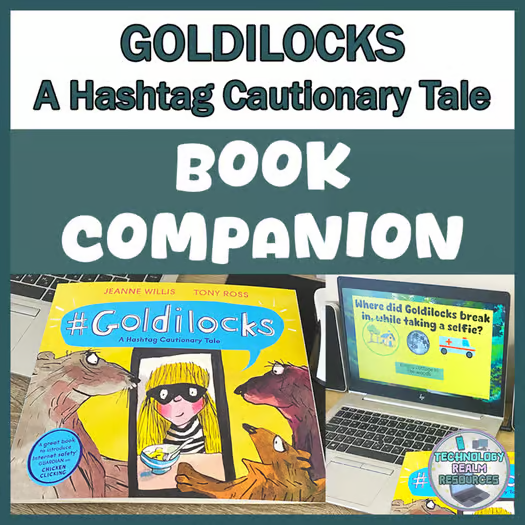
Also, I created a book companion resource for this book – here is a link where you can purchase it. The resource contains a total of 6 exercises, some coloring pages, discussion questions, an anchor chart and an interactive clickable quiz. Four of the exercises are unplugged (some of them don’t even require you to print), and two of them requires a smart device / computer / laptop and are done online (it’s about creating a word cloud for the book’s story, and then using the word cloud and the Internet to create a poster). This resource is super low prep – 2-3 pages need to be printed, they are all in black and white, it’s also very easy to use, perfect for your students ages K-3.
“Nerdy Birdy Tweets” by Aaron Reynolds

Nerdy Birdy is hooked on Tweetster, a new video game, but his friend Vulture isn’t interested in playing. They try to compromise to keep their friendship strong, but things take a turn when Nerdy Birdy makes a big mistake—he posts an embarrassing picture of Vulture online, with a mean caption! Hurt and upset, Vulture confronts Nerdy Birdy, who eventually apologizes and learns an important life lesson: online friends can’t replace the value of a true, real-life friend. This is where you can see and hear the whole book online for free: https://www.youtube.com/watch?v=vcQXzWSKdI8
The story takes a thoughtful dive into the challenges of navigating friendships in both the digital and real world. Something that I think students need to know from a young age (I’ve seen 6 year olds with Facebook profiles!). Nerdy Birdy loves spending time on Tweetster, a new social platform I believe looks exactly like Facebook, but when he shares an embarrassing photo of his friend Vulture with a mean caption, things take a hurtful turn that not all students will find obvious at first. Vulture’s feelings are deeply hurt, and Nerdy Birdy is faced with the consequences of his online actions (the core essence of Digital Citizenship). This heartfelt tale highlights the importance of empathy, respect, and pausing to think before we post. It’s a perfect way to introduce kids to the principles of digital citizenship and remind us all that online interactions can impact real-life relationships in profound ways.
“Dot.” by Randi Zuckerberg

Dot. by Randi Zuckerberg is a fantastic read for teaching young children about the importance of balancing technology with real-world experiences. Dot is a tech-savvy little girl who loves her devices and is a pro at navigating the digital world. However, when she starts feeling the effects of too much screen time, her mom gently nudges her to take a break and explore the outdoors. This simple yet relatable story shows how stepping away from screens can lead to meaningful, off-screen fun and creativity.
As teachers, we see firsthand how much time kids spend with technology, and while it’s a wonderful tool for learning and connection, helping students recognize when it’s time to unplug is just as important. Dot. opens up the perfect opportunity to discuss screen time limits and finding joy in hands-on, real-world activities. Whether you’re introducing a lesson on digital citizenship or simply looking for a way to encourage balance in your students’ lives, this book is a great addition to your classroom library. Plus, it’s an engaging story that kids will connect with immediately!
This is where you can find a read aloud of the book: https://www.youtube.com/watch?v=IHd7gi5Prz4
Each one of these favorite picture books of mine presents important lessons in a way that’s easy to understand and highly engaging, whether you’re reading them at home or in the classroom. By using stories like these, you can help your kids or students build the skills they need to navigate the digital world safely and responsibly. What are your favorite books for teaching digital citizenship? Share them in the comments—I’d love to hear your recommendations!
 Technology Realm Resources