On May 19 2019, I attended an extremely interesting event – an exhibition of Pravetz computers at the National Polytechnic Museum in Sofia. When I found out about this event (I think I saw it on Facebook) I immediately saved the date on my calendar and couldn’t wait to go. As a child and as a student, I never had the pleasure of touching a real Pravetz computer and I had never seen one live. It was because of this that I was convinced there was a lot to learn from the event, and I wanted to touch a part of Bulgaria’s technical past and history, as a self-respecting enthusiast on the topic of vintage technology.
Before I begin, I want to make it clear that this article is not intended to give a detailed history or chronology of Pravetz computers. In this post I just want to share some minor knowledge I have on the subject and also post some information and photos from the event.
I want to sincerely thank the National Polytechnic Museum that on the very day of the event, after I asked, I was allowed to publish these photos on my personal blog, as well as to show them to the students I teach. None of the featured equipment is mine, just the photos I took.
First of all, if you have never heard of the Pravetz computers:
Pravetz computers (in Bulgarian shortly: Правец) are the Bulgarian personal computers produced from 1979 that were widely used in scientific organizations and schools until the late 1990s, and are still in use in some schools. Bulgaria was the leading manufacturer, with its leading trademark Pravetz, of computer and peripherals electronics for the socialist economic union COMECON in 20th century.
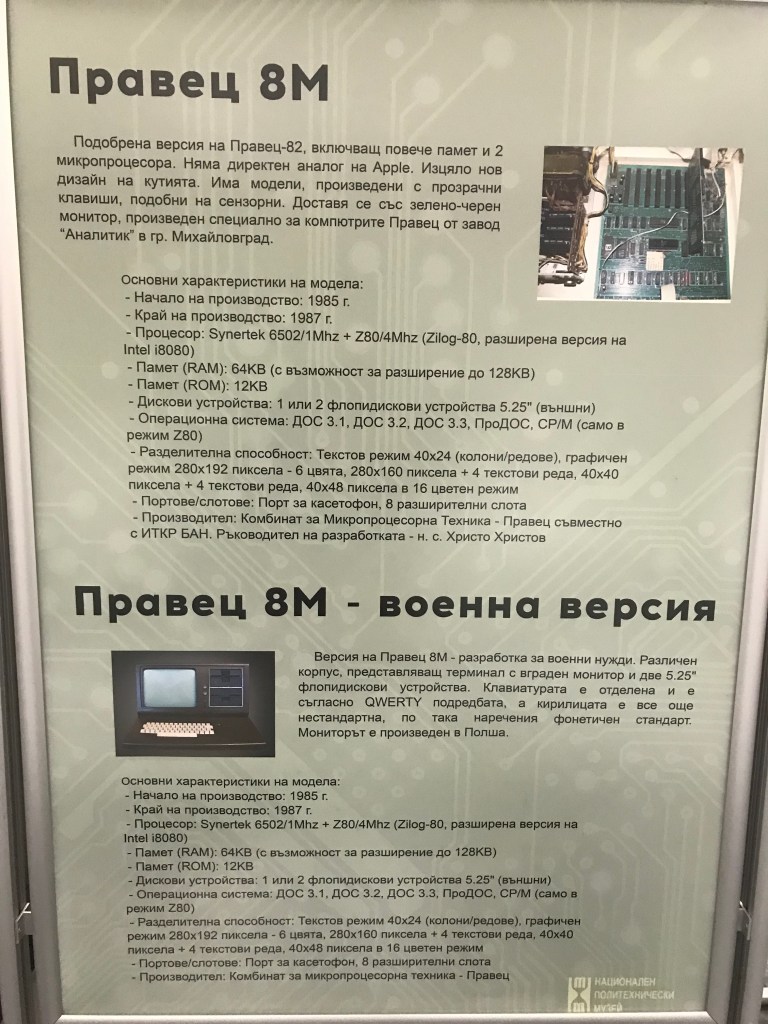
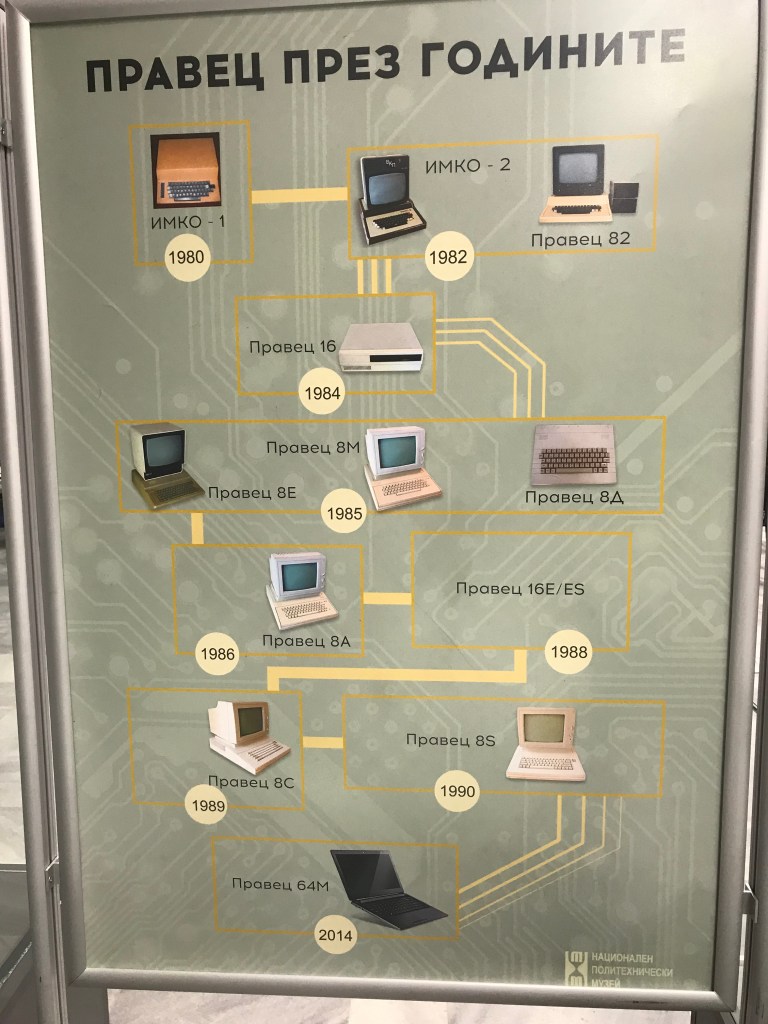
Pravetz 8М – from 1985
The interesting thing about this model is that it is not an analogue of an Apple computer (like most Pravetz computers that were being manufactured). It was mainly used for military purposes.
Price – it wasn’t sold freely on the mass market
This Pravetz 8M you can see in the middle of this picture:

Pravetz 8D – from 1985
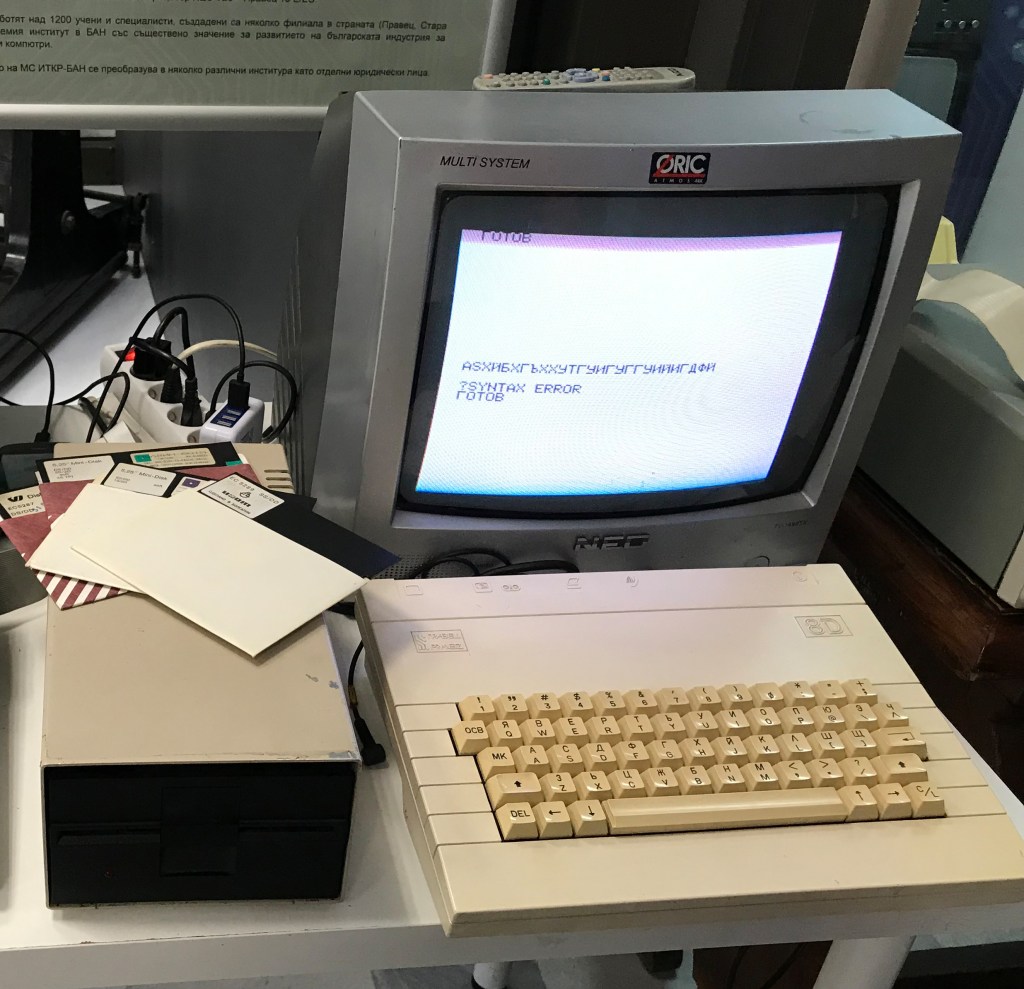
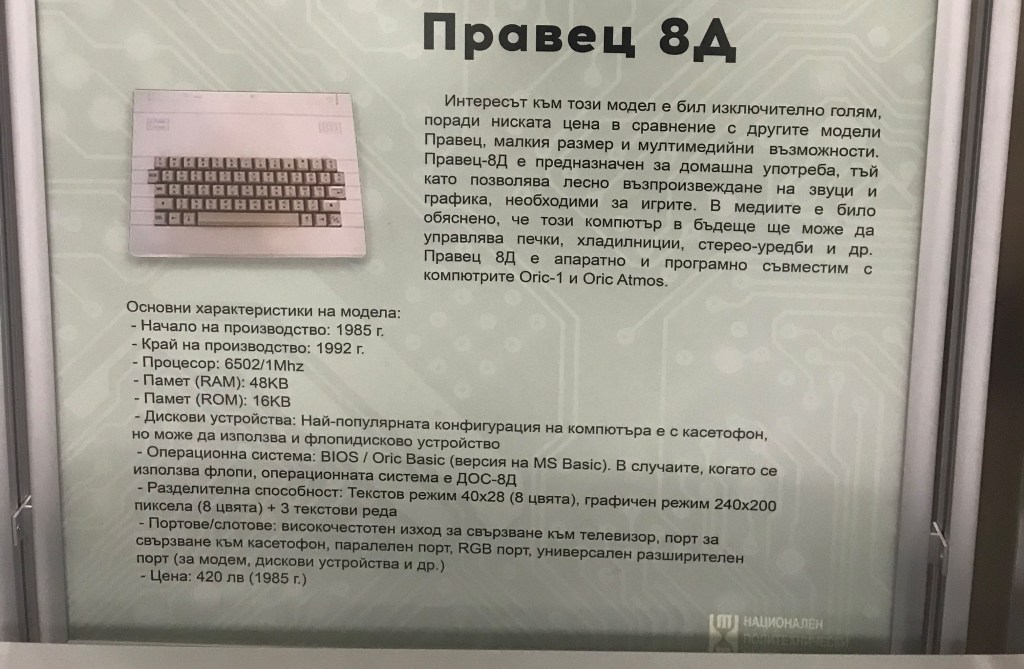
As you will read from the museum description that I took a picture of (if you know Bulgarian, that is), there has been unprecedented interest in this Pravetz 8D model due to its scandalously low price. Back then, computers were something extremely expensive and out of reach for normal people who weren’t scientists, military or high-ranking. The computer is intended for home use (8D = 8 Home). As seen in the event video I uploaded to my YouTube channel (https://www.youtube.com/watch?v=svI2cgW3GBw), on this computer the console (main screen) was brought out, where only commands can be entered and that’s it. No mouse, no interface, buttons, icons, etc. At the event, a child was standing in front of the computer staring blankly at the screen. This boy spent a lot of time with the monitor, tried the keyboard several times (as can be seen in the photo) and gave up. At that time, I had not yet started learning the BASIC programming language, so I didn’t try anything, but with my current knowledge, I would immediately write a few commands with great pleasure.
Price – around BGN 400 (the minimal monthly salary in 1985 was BGN 120, which in today’s money is 60 euro and $70)
Pravetz 8А – from 1986
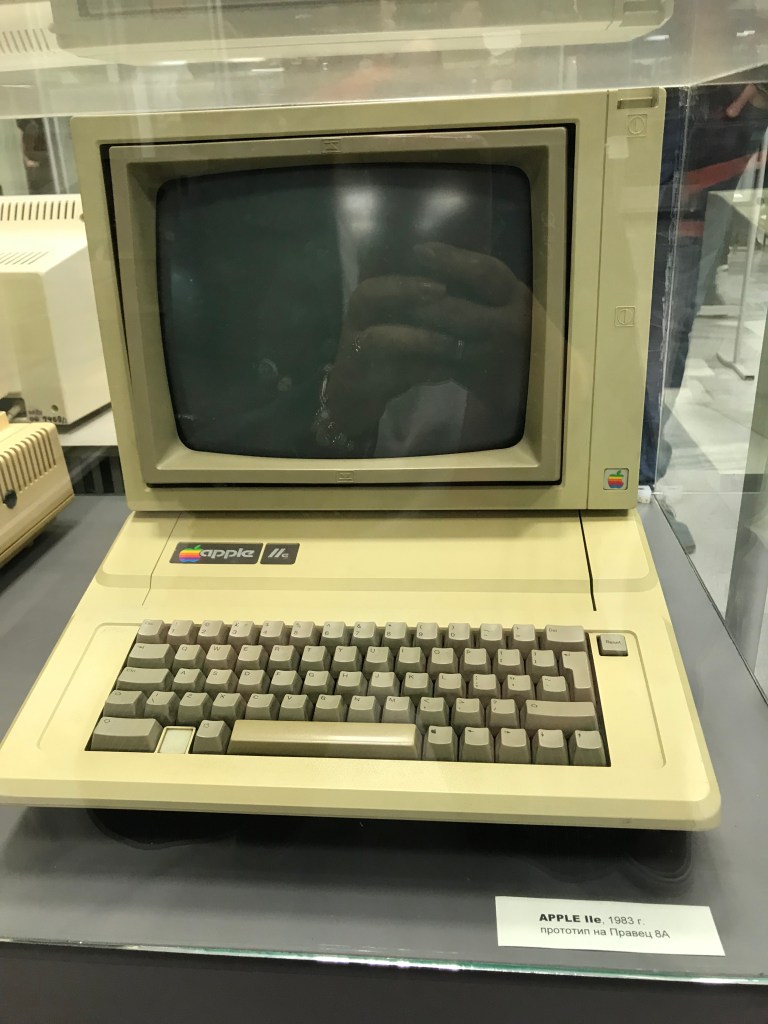
This computer is an Apple IIe analog. Its keyboard allows the use of lowercase and uppercase letters (something that was not possible in previous models until then). One thing that struck me is that the built-in tape deck support has been removed.
Price – wasn’t sold freely on the mass market


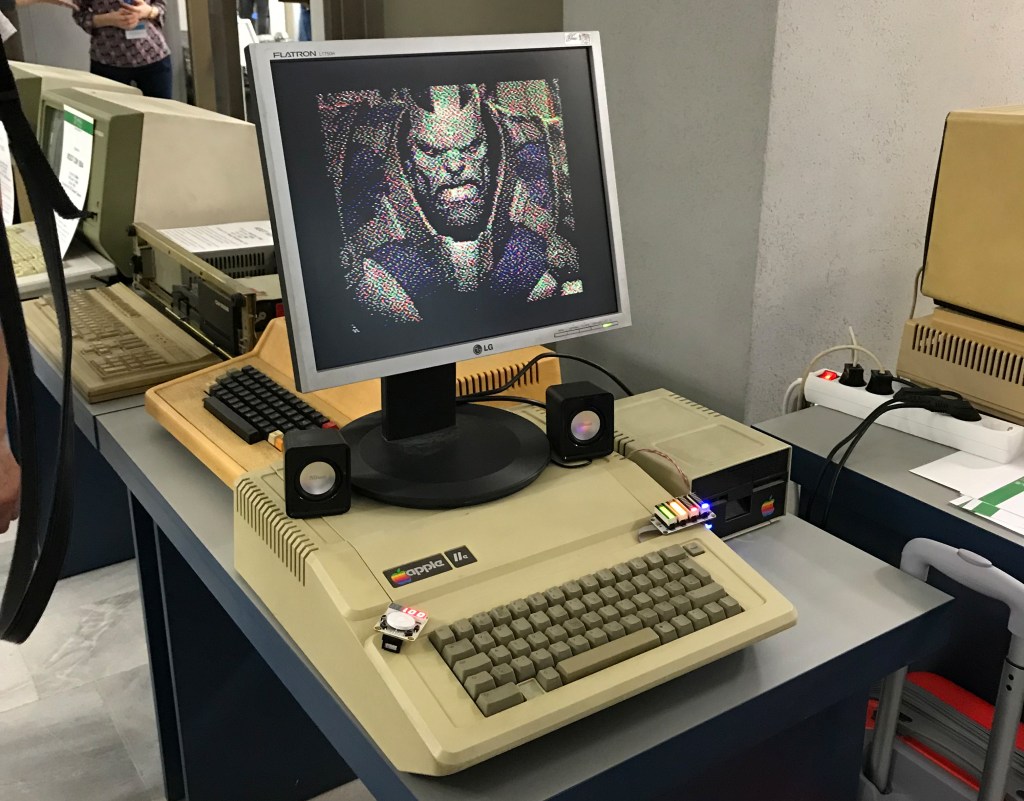
Here is a picture of the Apple IIe computer:
On another Apple IIe computer there was an interesting screensaver on*:
* Check out all the cool screensaver pictures that are EVEN in color (wow) in the YouTube video I uploaded to my channel – https://www.youtube.com/watch?v=svI2cgW3GBw
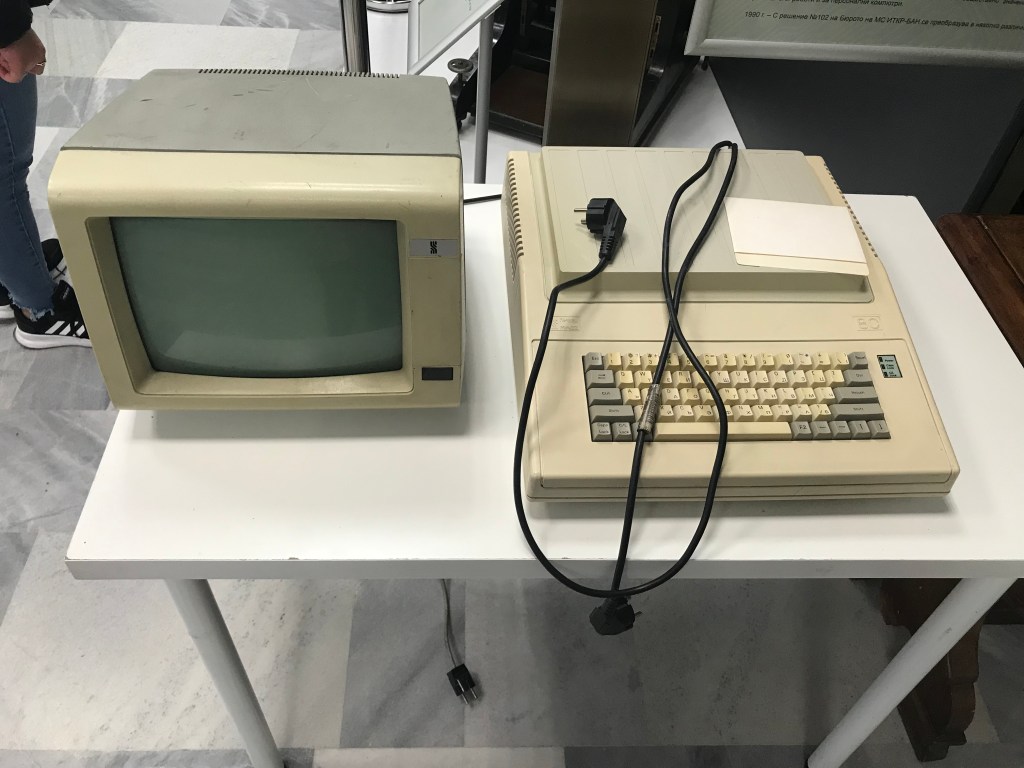
Pravetz 8С – from 1989
This is the most common Pravetz model, which is free for anyone to buy. Roughly 50,000 units were produced per year, most of which were for export to the Soviet Union. The computer also has the (then) modern joystick port. This model was widely used by Bulgarians in the 1990s, present at most Bulgarian schools.
Price – around BGN 1500 (minimal monthly salary in 1989 was BGN 140, which is around 70 euro and around $80)

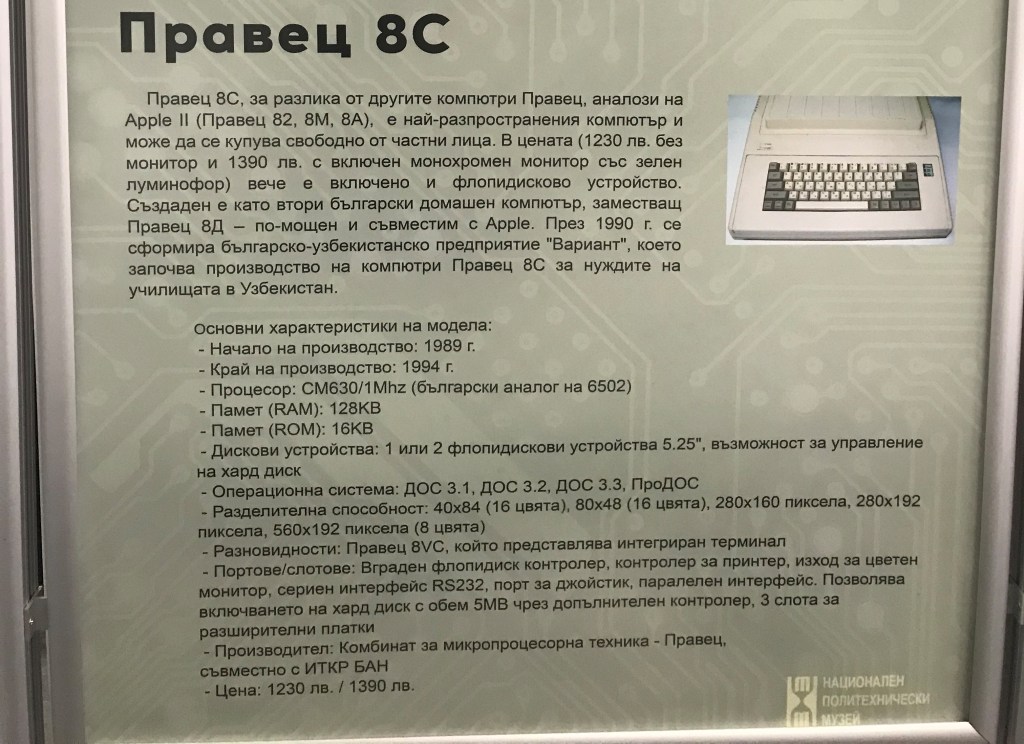

And here I am, satisfied on the next picture, having seen and read everything from the exhibition, and already unwinding – playing Karateka on Pravetz 8C. It was so exciting, awfully slow (as it is fashionable to say today – “It was lagging so much that it was as if I was playing in screenshots), except that this is not lag, but the maximum that the machine is capable of with its limited amount of resources. Still, I had a lot of fun. If you want to play Karateka and go back in time, this is a link to a site where you can play it online: https://playclassic.games/games/action-dos-games-online/play-karateka-online/play/

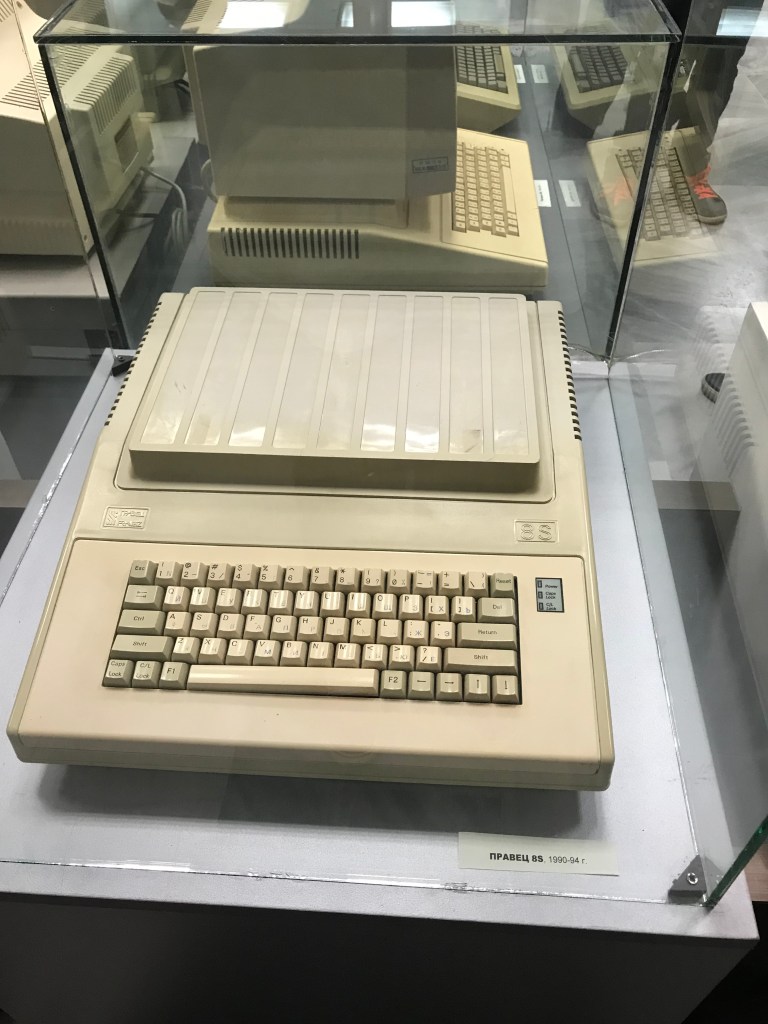
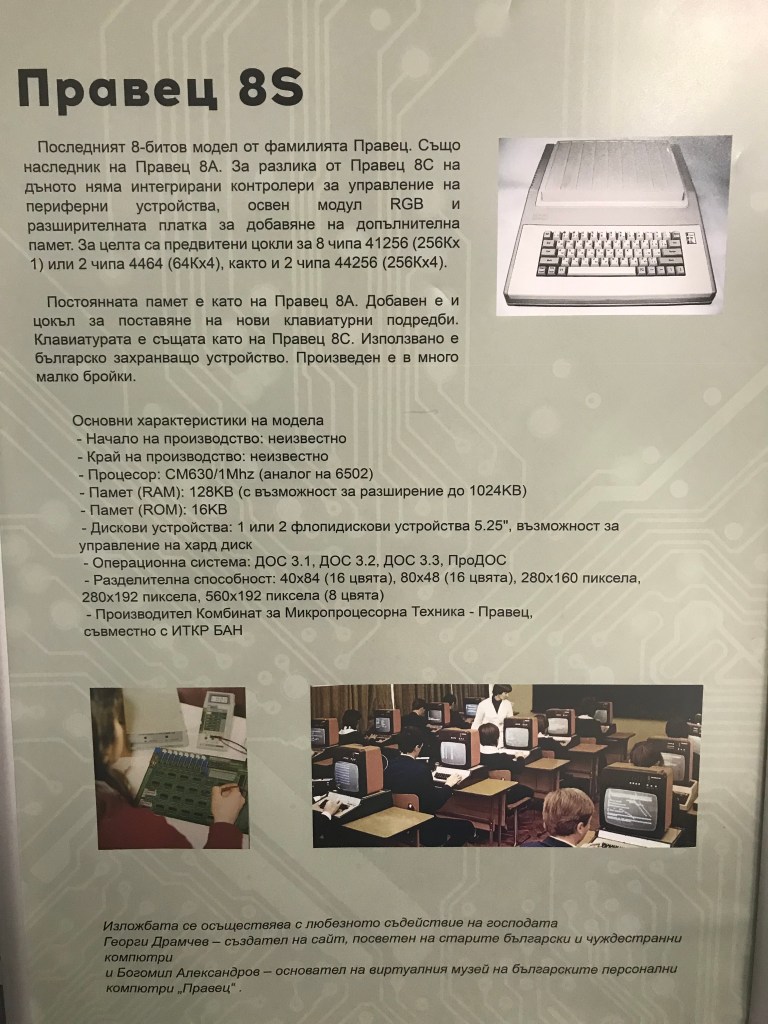
Pravetz 8S – from 1990
The last 8-bit Pravetz model ever produced. The 8S is an improved version of the 8C. The computer was produced in very small numbers.
Price – wasn’t sold freely on the mass market
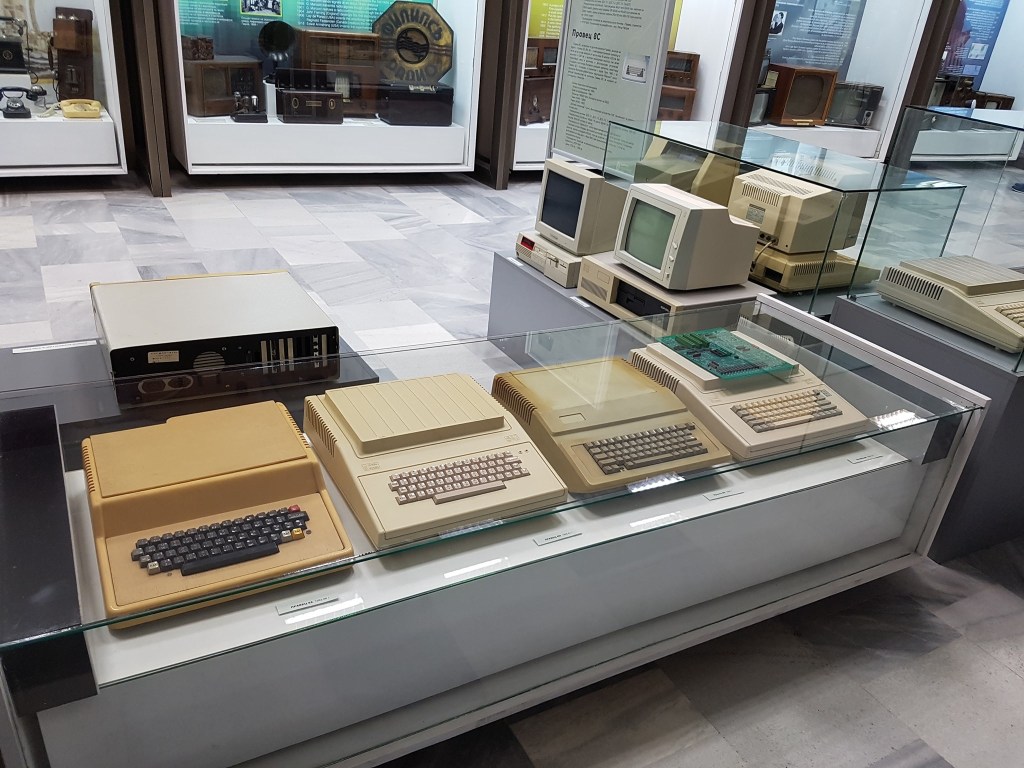
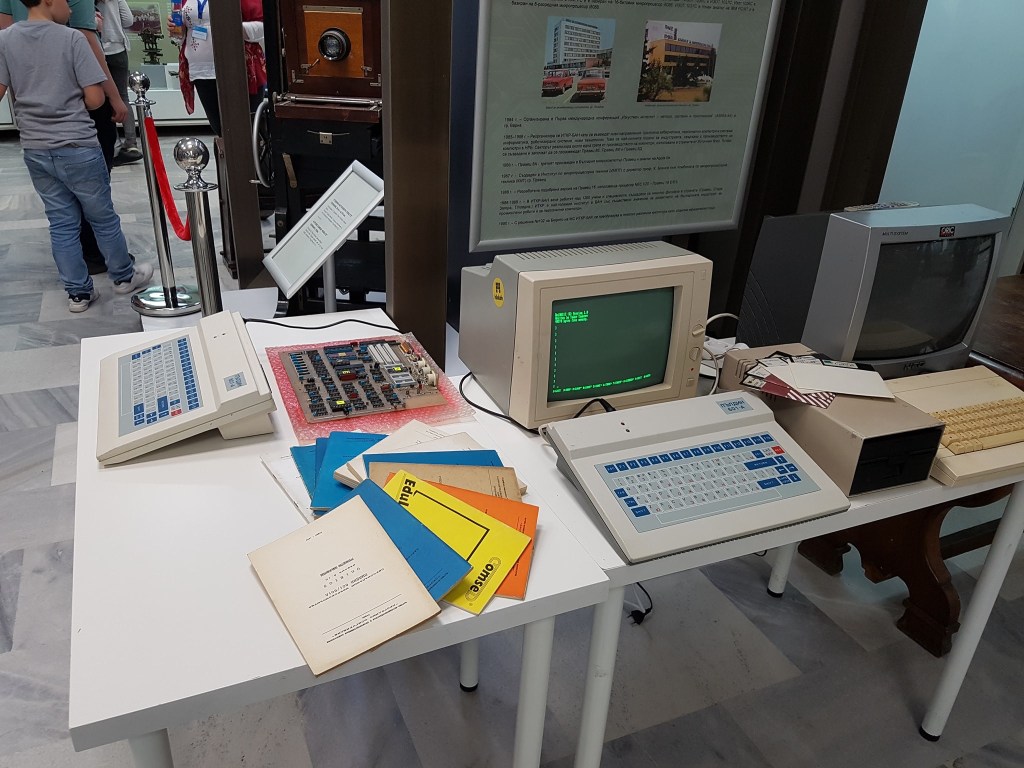
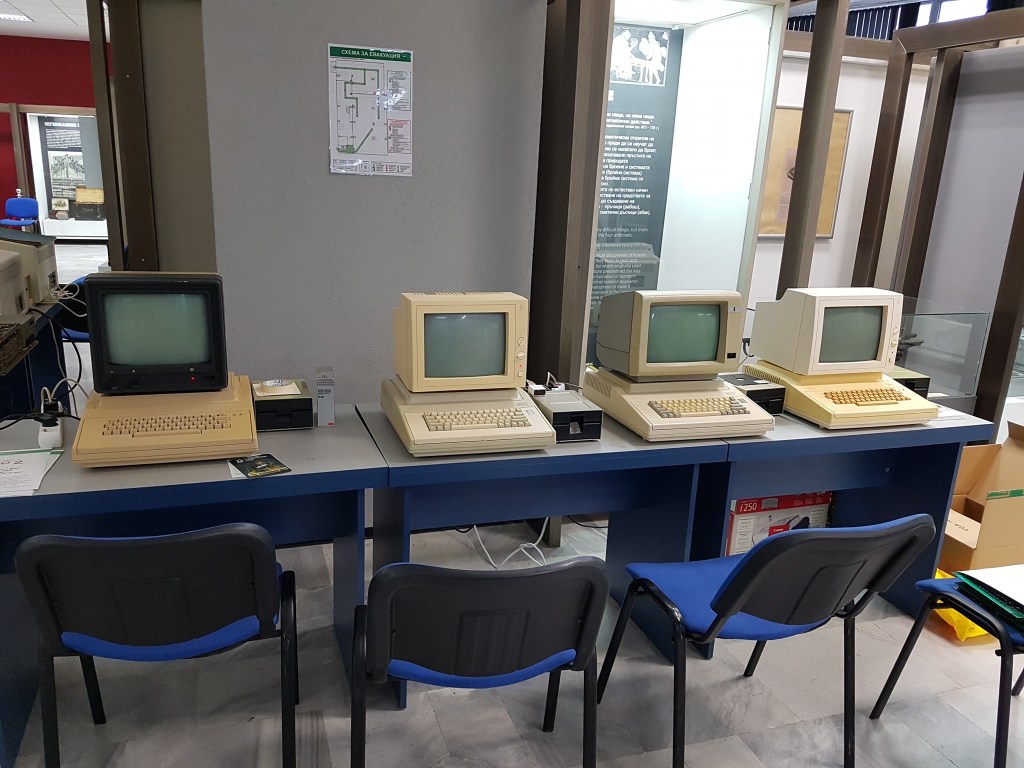
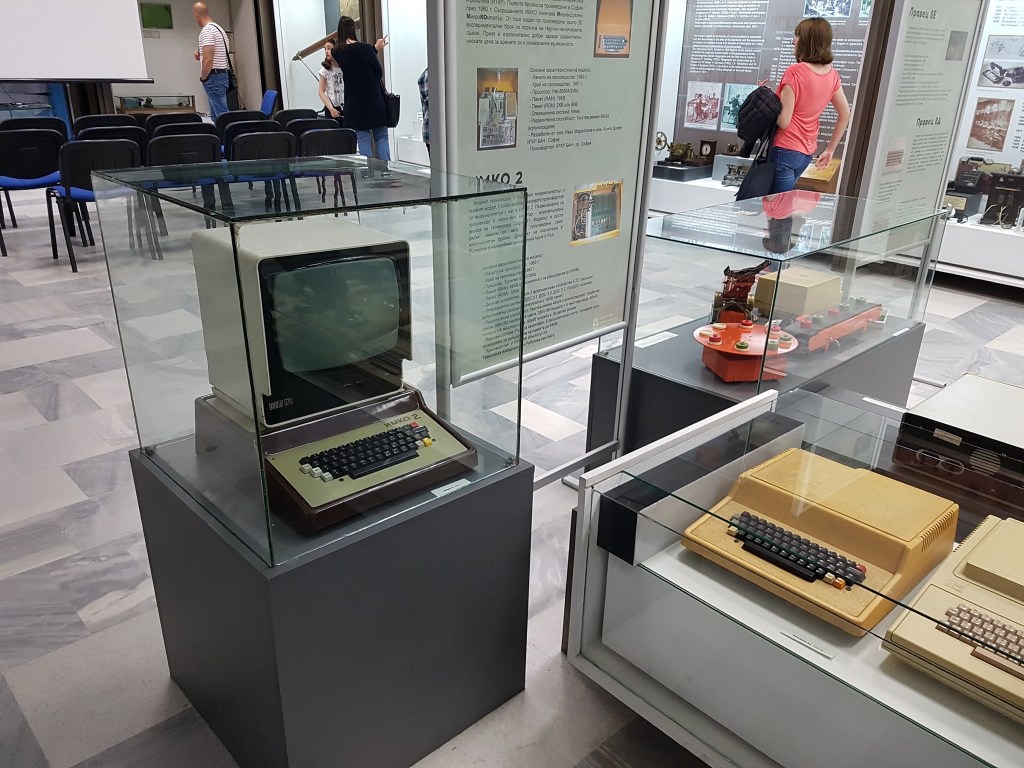
Other pictures from the event:

 Technology Realm Resources
[…] love of outdated technology from the past, and of Pravetz computers in particular, inevitably led me to explore the BASIC programming language. Actually BASIC = […]
LikeLike